Showing posts with label un-curry. Show all posts

Monday, January 9, 2012

BEST FOOD MOMENTS OF 2011


2011 is a year I would rather not think about very much, if not actually forget. I don’t feel that way very often but I did last year. And yet there was a lot of wonderfulness about the year too: celebrating a decade of my daughter’s life; getting to Paris for the first time; being nominated for a cookbook award; making two trips to India in the space of six months, one of which was to research a piece for Saveur magazine! So, despite all the deaths and mishaps, I feel fortunate for all that I have and I also feel increasingly the need to make the most of every moment, every opportunity.


This is the time of year when writers begin to document the best of everything - movies, books, restaurants, sports. Food is, for me, inevitably connected to memory. I still remember with delight eating cream and sugar sandwiches at my grandfather’s home in Dehu Road. I was only four or five then but it was a happy time of innocence and love, and it always smells like sweet, fresh cream lifted off newly boiled milk.


So if I must stroll down the memory lane of my year, the most satisfying way to do it would be by recalling my favorite food, and therefore happy, moments. Now that I think about it, I can only even think of two, no wait three, oh, four, horrible food moments in my entire life. Let’s not go there, shall we?


I


For a New Year’s Day anniversary party, I cooked a kosher dinner for 40 people. My student JS is Jewish and had asked if I would cater her 25th anniversary party on January 1, 2011. Since she keeps a kosher kitchen where pans used for meat and dairy cannot be mixed, it was an exciting challenge, first to create an Indian menu that honored her religion and dietary rules, then to do some of the final cooking at her home, setting out the food in specially designated bowls and platters.


I enjoyed figuring out what Indian dishes I could make to suit her requirements and was even able to give her some Indian Jewish dishes, like Bene Israeli fish cutlets.


II


I had started my Indian pop up restaurant, The Un-Curry Table, the previous autumn and we decided to host a Marathi Wedding Feast on January 30. After having served Indian food plated Western style for months, I was itching to cook something traditional. I wanted to cook Marathi food just the way it should be made and serve it to Angelenos who had never eaten it before.


We served 70 diners a multi-course dinner on banana leaves, bringing food table-side the way it is at weddings in Maharashtra, with servers offering more rice, varan, squash-cashew sauce, potato bhaji, kheer, puris, loncha and koshimbir to a crowd that was amazed as much by the manner of service as by the food we served.


One guest could not stop talking about my tomato-onion raita. As simple as the dish is, she said she had never eaten any raita so good. That made my day. And the secret? Using milk instead of water to thin out the yogurt, blending it really smooth before adding in the vegetables, and balancing its tartness with a pinch of sugar.


Keya helped serve puris and made sure everyone got their fair share. A certain well known actor used to come to the pop ups and he was there that night. He asked her for another puri while she was still serving the first ones to other guests. Celebrity meant nothing to Keya. She honestly told him that she would come back to him when everyone else had gotten a puri too. When she did, he high-fived her for her fairness!


It was a huge treat for me to cook my favorite food for people in Los Angeles and the biggest thrill came when the LA Weekly published a story about the dinner that week. For a change, Indian food was not being equated with chicken tikka masala. The word Marathi popped out of the piece everywhere and that made me proud, not out of regionalistic zeal but because I was finally doing what I had long wanted to, sharing the beauty of my native cuisine with people outside Maharashtra.


III


On Valentine’s Day I had been asked to guest chef at Royal/T, a very cool and funky cafe-art space in Culver City. Inspired by the restaurant’s name, I designed a menu of Royal Indian recipes, helped greatly by Shalini Devi Holkar’s fabulous cookbook, The Cooking of the Maharajas. The four course menu included an appetizer plate for lovers to share and main courses like fried quail with shirin pulao, and succulent pomegranate lamb.


But the most memorable part of the night for me was working alongside trained staff, three line cooks and the head chef of Royal/T. Used to following a chef’s lead and skilled at their work, they worked with me all day and over the three hours of dinner service, as a well oiled machine, cranking out meat, fish, poultry, vegetarian dishes, and desserts, in perfect sync.


The kitchen may have been hot, the work tiring, the pace unrelenting but we did not feel it. We enjoyed ourselves, working together calmly, not a short tempered or impatient word spoken. Dishes were beautifully plated after I had shown my staff just once what I wanted. Having before worked only with friends or friendly, keen-to-learn acquaintances at my pop ups, working with a professional staff was a revelation. At the end of the 12 hour day and a week of planning and prep, I was exhilarated as I drove home. Cooking in a restaurant was FUN!


IV & V & VI & VII


Three food moments of the year in Paris and one at Versailles. Vive la France! I am not even going to include our decadent chocolate feast at Angelina on the Rue de Rivoli in this list because it demands an essay of its own!


In late February, Keya and I flew to France to attend the Gourmand Cookbook Awards (my book was nominated in the regional cookbooks category) at the Cookbook Fair in Paris. We stayed with our friends Sarah Bentley and Alan Kahan at their home a few blocks south of the Eiffel Tower. Alan had always told us that one of the reasons they had bought that particular apartment was that it was within walking distance of not one, but five boulangeries. If one bakery was closed, they had options! After a strenuous trip by Metro (NO escalators!) from the airport to their home, Keya and I looked at each other and breathed a sigh. Finally we were here.


As we were taking off our coats - it was cold in Paris in late February -- I told Alan that I had promised myself that when I got to Paris, the first thing I would do is eat a pain au chocolat. “Get your coats back on,” he replied, “Let’s go get one before the boulangerie nearby closes.” I had not believed that bread or pastry in France was very much different from what we get in California, where we are very spoiled with excellent food.


With the first bite of that little pain au chocolat, Keya and I turned to each other with looks that said, “Oh my God, this is divine!” We inhaled those pastries in under 30 seconds and proceeded to eat one or two a day for the rest of our week long stay! So what makes them different? They are airy, light, only slightly sweet with bitter chocolate inside and they do not leave you feeling stuffed. It’s the flour, the water, the quality of the chocolate, and frankly, the size. Smaller is better in this case. And there is that je ne sais quoi that I don’t really want to “sais”. Some mysteries are delicious left alone.


Every evening Sarah or Alan cooked a different French meal for us and every one of them was delicious, but for me, the stand out was fondue night. I have had many fondues, many good fondues. What Sarah made that night, stirring a fabulous French wine into Gruyere and garlic and serving it with chunks of fresh baguette was superbly satisfying. There is nothing like a good Gruyere, it may just be one of my favorite cheeses. I also fell in love with that floral wine that we also drank at table. I liked it so much that when I accidentally knocked my glass over and broke it (I was not tipsy, it was a small table!), I first apologized for my clumsiness and then kept apologizing. Sarah reassured me that it was all right and I said, “No, it’s not! I lost the last of my wine when the glass fell!”


That Sunday, our friends accompanied us to Versailles. When we got off the train with other tourists, the horde headed straight toward the chateau but Sarah and Alan steered us to the right. A short walk away was the weekly Versailles market and it was just what I needed to see and experience. If there was ever a heaven for the gourmand, this was it. The lines wrapped around the cheese stalls, everyone using the wait time to decide which of the hundreds of cheeses to buy this week. There was a spice stall where I bought herb and spice blends for pastas and ratatouille, and Keya chose a blend of Himalayan salt, pink peppercorns and rosebuds. There were butchers and green grocers, stalls selling dried fruit and nuts, olives, biscuits and breads, charcuterie.


We bought baguettes and three cheeses, hard cider and non alcoholic, fresh raspberries, cookies from Bretagne, saucissons sec and pate. We lugged our treasure to the smaller of the two chateaux and ate on the steps overlooking the water, in the sun and out of the wind. The day was brilliant, the food simple and satisfying, the company uncomplicated. It was the best kind of picnic.


VIII & IX


Since we were in Europe, we decided to hop across the channel and visit our friends, Jack, Alicia and Madeleine in Bristol. They had recently moved there from Los Angeles and we missed them terribly. Keya and Madsy were in preschool together and had been friends ever since. Even better, thanks to the girls, we had become family friends and I was really looking forward to seeing Alicia and catching up with her after a five month gap.


The other exciting aspect to this trip was the possibility of a visit to Bath, which is only a half hour’s drive from Bristol. As the daughter of English teachers, I had grown up with the literature. Everyone from Jane Austen to Georgette Heyer (not quite literature, but in my mind, almost there) has used Bath as a backdrop for their novels and I had seen its streets and baths and vistas in my mind’s eye. Yet, despite having traveled a good bit in the UK, I had never visited the city before. Sanjiv, my architect husband, said it was the city he liked the most in England and I was as keen to see the architecture as to drink the waters and perhaps set foot where Annis Wychwood and her ilk walked three centuries ago.


I was touched by the first meal we ate at Alicia’s. She had Jamie Oliver’s new cookbook, Meals in Minutes and cooked dinner out of it for us. It is always a treat for me when someone else cooks for me. From shopping for ingredients at Sainsbury’s to watching Alicia cut and chop in her new pink kitchen (!) as we caught each other up on our lives, I enjoyed every moment.


That Sunday the rain let up and we drove through winding lanes and bright green meadows under sparkling skies to Bath. The newly redesigned and configured museum over the Roman baths is a treat. My treat of the day was having afternoon tea afterward at the Pump Room where so many of Heyer’s characters had sat and watched the ton, wondered about their futures or been swept off their feet by dashing Regency bucks.


Walking the streets of Bath felt oddly familiar. And we were given a show of the range of English weather, from brilliant sunshine, sudden rain, and cold gusts of wind that had us shivering despite our winter wear. Some of the most photographed street scenes in the world are here and I have seen those pictures many times. I did not feel like I was walking through a photograph, more like taking a walk through history with some of my greatest heroes. I could see Jane Austen walking up to the lending library or might pass her strolling with a friend on Gay Street.


Sitting in the Pump Room was slightly different. History was still living here, life kept on going. The past was less artifact than coexistence, something I was familiar with from India where the ancient past coexists, somewhat grumpily, with the 21st century. And there was the food. Eating tea sandwiches and sipping English (read Indian) tea was not novel but I relished the scones because we do not get good scones in North America, and you must travel to England for clotted cream. Alicia said Somerset is known for its dairy products, and rightly so. I was satiated at the end of the meal, not least because of the company it was taken in.


X


Ten is tough. I realize I could keep on sharing food moments until the list puts you into a food-incuded slumber. Coffee and a delicious egg and pesto pastry at Trails Cafe after a hike up to Griffith Observatory, a nostalgic cup of coffee with thick, Dutch milk at Schipol in Amsterdam, exquisite beef cheek ravioli at Trattoria Locanda in November, my favorite dessert, Sacripantina eaten with an old friend at Stella’s in North Beach, huitlacoche tacos at Cacao Mexicatessan, my mother’s soft, tenderly sweet puran polis, made especially for me to bring home to Keya or the sabudanyachi khichadi she had waiting for me when I arrived home for a brief visit.


If I have to choose, I would say my most special moment was with the woman who, apart from my mother, has been my greatest culinary influence. I was lucky to see my maternal grandmother in August, a few weeks before she died. She was in hospice, shrunken to about half her height, weighing less than my 10 year old does now. I remember her as a giant, tall, proud, strong and capable. It was not easy to see her, toothless, sunken cheeked, looking the way her mother looked when she was very old in the early 70s.


Because she was deaf, conversation was not very easy. What reassured me that the essence of my grandmother was still present, was her eyes. They gleamed and she spoke to me with them. She was so starved for entertainment that she was eager to read what was on my T-shirt. “Amsterdam,” I said loudly, “Where life gets lived." She nodded. "I went there for my 40th birthday.”


I gave her the box of dark chocolates I had brought her. Chocolate was about all she could eat and enjoy these days. I approved of the fact that she still was able to eat what she liked. She took the box and ever-polite, said, “Thank you.” To my delight, she began eagerly to read the back of the box, the nutrition facts and calorie counts. A 92 year old woman on the verge of death and she had enough interest in life to want to read, to know more.


When she was done, my cousin Reena asked if she wanted to eat a piece and fed it to her. I was still too shaken by the moment of this meeting to do anything more than watch and weep. As Aji slowly ate that thin slab of goodness, relishing every mouthful, I drank her in. Life is meant to be lived to the fullest and enjoyed to the very end. That is what I took away from that moment and into the new year.


I wish you all a deliciously happy 2012, a year filled with memorable food moments with the people you love.


Tuesday, August 16, 2011

Back in Bombay Again... with a twist

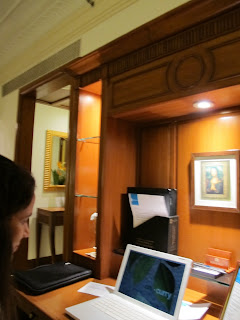
Welcome Elephant in my Hotel Room

For the first time ever, I am in my old city, Bombay/Mumbai, and not in my college dorm, not in the working women's digs I lived in two decades ago, not in a home my husband and I shared, and not at my in-laws where I have stayed on every vacation since moving to the USA in 1996.

Everything is changing. I am in a hotel that did not even exist when I called Bombay home from 1989-1995 and wrote with 20-something passion about architecture, housing and urban development issues for one of the city's oldest broadsheets.

I am on the 28th storey of a hotel built on land in a neighborhood that was once chock full of bustling cloth mills and that would not, by law, have been allowed to be built back then! The mills stopped humming during labor protests in the 1980s and never re-opened.

By the early years of this century, loose ends from pending lawsuits between mill owners and labor unions were being tied up and land was freed from zoning restrictions. Owners are now selling these very profitable properties to developers who build towering high rises to support a rapidly growing island city. Land is at a premium and the unofficial population is a staggering 19 million. That is the history lesson!


Bombay's skyline looking south and east toward the docks

What boggles my mind right now, apart from the daily changing skyline that I no longer recognize, is the fact that I am here on my very ownsome, a state I have not achieved in this town before.

What is hard to grasp and accept is the quiet that only an air-conditioned room with the double paned windows and heavy drapes of a fancy hotel can create. I don't hear the sound of the koyal up here, singing me awake in the morning, or the flute wallah walking down the lane, playing one of the reed flutes he has made himself.

It is a strange sense of displacement in a place suspended out of reality. I am not accustomed to this detachment from a constantly humming and humid metropolis. Is this kind of escape how the privileged are able to keep clear of the problems and challenges that 95% of the people in my country face?

I am certainly not blase about the many people who hover about me at every turn in this fortress of luxury, 'butling' and cleaning, smiling and scraping, kowtowing and doing their lovely best to make me and every other guest here happy.

Service in India is a centuries old tradition. But it is not one I have ever been comfortable with, or reveled in. I'd rather get my own tea, thank you. Because, you see, I can't shake off the fact that my young woman "butler" has to make her unsafe way home on a bus or on foot at 2 am -- where does she live? -- after she has finished waiting on me.

Or that after driving me from the airport to the hotel in chilled comfort, my chauffeur has to catch a muggy commuter train at midnight, sleep for a few hours and hop back on the next train for a 2 hour journey to start another work day.

And that shared table... though I am here to write about food and I am eating it this first day, I don't seem to take it in. There were six of us at dinner tonight -- my mother-in-law, sister-in-law, her husband and their two sons.

But after a day of talking about food and cooking, I found myself unable to eat much. Perhaps it's just jetlag, perhaps it is me preparing mentally for some serious eating over the next few weeks.

Whatever the cause, tonight's meal was more about communing with family about dear and departed ones and then, strangely, saying goodbye myself and going somewhere I have never called home.

And yet it is apropos. After all I am here to write about a community of Indians who, for a time, had nowhere in this nation to call home!


Getting ready to write the blog again!

Tuesday, November 30, 2010

Success?

This summer a friend told me she was starting up a website "that offers a glimpse into the minds and lives of people who are successfully living their dreams..." and asked me to be a contributing writer, sharing thoughts on how I deal with my various career choices and "grapple with things like [one's] own sense of perfectionism, [one's] definitions of success, and [one's] connection to what's important."

As a writer, it is tough for me to refuse any opportunity to write. What I loved about this request was that it made me focus inward more than I usually need to do in my writing. I really had to introspect and reflect to give her the first two pieces she had asked for, to launch the website with in August.

Unfortunately, late in the summer, my friend's plan was put on hold by a tragedy and she is not resuming work on the website for now. I wish her all the best for the next few months. She suggested I offer my articles elsewhere for publication. So I thought I would share them right here, on my blog. The first, which appears below, is about success. The second tackles the idea of failure and I will post it tomorrow.


Success? What is that?


I have never viewed my life or my future in terms of success or being successful. I have certainly never equated any notions of success with cold hard cash. For me, success has resulted from the pursuit of smaller goals that have evolved and altered over the course of my life.


What I wanted most out of life, from an early age, was happiness. The desire to be happy has always driven me, and thankfully I have had more than an adequate measure of it! Luckily, I realized early on that happiness was not something to wait or hope for, or to look forward to. Happiness is in the here and now. There are many ways to be happy, and to make oneself happy. The most important, I find, is to be happy with myself and within myself and to greet each day as a new beginning.


The great film director, Ingmar Bergman said in Bergman Island, a 2006 documentary of his life and work, “The demons don't like fresh air. What they like best is if you stay in bed with cold feet. I always go for a walk after breakfast." I agree. I like to wake up happy and ready to go.


In my mind there is a critical connection between happiness and success. When I was 8, success was the joy of being given another mystery storybook as a gift. When I was 12, it was discovering that I enjoyed writing and wanted to be a writer when I grew up. At 16, success and happiness meant knowing that the man I was in love with reciprocated my feelings. At 20, it meant getting into the journalism school of my choice, then getting to work as a reporter at a reputed newspaper. When I was 26, it was the opportunity to write a book. By the time I was 33, it was getting pregnant when the ringing of my body clock had become most insistent. Three years ago, it was getting my green card approval so I could finally start Un-Curry.


Success is the feeling of satisfaction and relief when after five years of hard work my cookbook was finally published last year. But it is also the look of enchantment on my daughter’s face when I read her a story; the reaction of a friend when I offer a shoulder to lean on; my husband’s delight when I cook his favorite meal.


Perhaps my ideas of ‘success’ come from growing up in a family where money was never very high on the list of priorities. Learning, friendship, caring and compassion were. My parents are both professors of English literature. They traveled a lot for pleasure and work and made sure never to leave my brother and me behind. Growing up, I lived in different parts of Asia, Europe and the United Kingdom. I often think of Rudyard Kipling’s famous, frequently misquoted line, “East is east and west is west and n’er the twain shall meet...” in terms of myself because in my life, east and west have met, providing me a unique insider-outsider perspective to the world’s politics, writing, culture and foods.


Part of the striving for success -- of any kind -- is to work hard, study, learn skills and practice them ad nauseam till you have the necessary experience and expertise. It is never too late to start. As a writer, I often meet people who tell me they wish they could write; that they cannot write well but would love to; that they have stories to tell but no skill with which to tell them. I tell them to just start. “Do it regularly. The skills will come, the experience will build, before you know it, you will BE a writer.”


That applies to almost anything you set your mind to doing. Cooking, skiing, mathematics, surfing. I believe that if we and the people around us don’t limit us, most of us can acquire a variety of skills (think Howard Gardner’s multiple intelligences) and pursue several professions successfully throughout the course of our lives. This is what I, as an immigrant to the USA, admire so much about Americans. They pick themselves up from misfortune and start over at any age, acquiring new knowledge and skills as needed and rebuilding their lives with determination and energy! This way of approaching life, as a constantly shifting but achievable set of goals and aspirations rather than one distant star to aspire to, is admirable.


What is also important to remember and what I, as a perfectionist, had to teach myself, is that, while striving for your goals, you also need the ability to let go and to go with the flow. I have motherhood to thank for helping me acquire this.


As many of you know, the only thing that is predictable about parenthood is its unpredictability. Nine years ago, with the birth of my daughter, I stopped being the A-type, driven journalist who had to do everything -- from writing and editing to house cleaning, cooking and entertaining -- excellently or feel she had failed.


The first thing I let go of after my daughter’s birth was the dish washing! That might sound trivial but for someone used to cleaning her home, refrigerator included, once a week from top to bottom, it was very difficult to see dishes piled up in the sink. Did it really matter though? It was an education not just in understanding the pitfalls of perfectionism but also in prioritizing. Dishes or daughter? Daughter! Cleaning or cooing to my baby? Definitely cooing!


And going with the flow? Strolling in our neighborhood with my toddler was good training. A solo walk might take me 15 minutes. With a child meandering, squatting to observe some ants, pick up fall leaves, stare at birds flying overhead or smile at other walkers, we might be out for a good hour, no matter what deadlines awaited me at home. Not only did I learn to go with the flow, I remembered the importance of stopping to “stand and stare.”


These abilities have since come in handy. At Un-Curry, my catering company and cooking school, I have to deal with clients, plan menus, shop, prep, cook, teach, cater parties for 8-125 guests, with precision, efficiency and passion. I have to know where to spend my time and where to cut my efforts short. I have to put aside my own opinions sometimes and go with the flow of my clients’ predilections, the limitations of ingredients and kitchens.


At this point, you might be asking, how did a journalist get into teaching Indian cooking classes and catering home cooked, regional Indian food? I have been fascinated by food for as long as I can remember. Many of my sharpest memories are connected with it. As a very young child in Maharashtra (one of India’s largest states), however, I was a fussy eater and had no interest in cooking. My mother and grandmothers were superb cooks and came from a culture where one cooked every day and rarely, if ever, went out to eat. My mother’s family also entertained lavishly and frequently. I was constantly inhaling the aromas of their cooking -- chicken drenched in cilantro pesto, guava fudge, tomato jam, garlicky brown lentils -- and I was encouraged to ‘taste’.


My food history is not typically Marathi (of my state). I spent my childhood in Canada, Wales and different parts of India, moving every few years, and eating a variety of foods that my mother liked to experiment with: it might be chana masala one day, pork chops with mushrooms in wine the next, falafel the third. This was in the late ‘70s and early ‘80s when exposure to international cuisines was not what it is today.


Perhaps because eating the traditional food of my ancestors was a rare treat in my mother’s international kitchen, as I grew older I cultivated a great taste for the food of my state. In my early 20s, I wanted to learn more about it and so began my forays into the world of cooking. Marathi food – with its flavors of coconut, rice, jaggery (raw sugar), mango, and kokum (Garcinia indica); its characteristic seasonings of mustard seed-turmeric-asafetida, or ghee and cumin seed; and its delicate crunch of stir fried vegetables – was a means for me to reconnect with my past, to delve into my ancestry. It also has become the way to my future.


Sunday, November 28, 2010

FOOD TRIPS ON PAPER

My friend Lalitha, a journalist in Bombay, recently started a food book journey. So when she asked me to recommend some stops on her route, I had fun putting together a reading list for her.


As I culled titles from my bookshelves and my memory, I recalled wonderful moments spent with MFK Fisher who was introduced to me a dozen years ago by my dear friend and one of the best [unfortunately unpublished] writers I know, Melissa Williamson.


Fisher still epitomizes the best in writing and particularly, food writing, thanks to her ability to tell a story, be poetic without being sentimental, make you hungry and satisfy you simply with the words on the pages of her books.


I thought also of recipes cooked over the years that have become favorites: Caesar salad from Craig Claiborne’s The New York Times Cookbook, one of the stalwarts in my kitchen; potato pancakes and ginger snaps from that classic, The Joy of Cooking; and countless recipes made with my daughter, Keya from children’s cookbooks like Mollie Katzen’s Honest Pretzels.


I reopened Bourdain’s Kitchen Confidential which I had read when it was first published and that I have recently been contemplating exploring again, now I am in the “restaurant” business myself.


So, Lalitha, here are my picks for your food travels. Many are dear to my heart, some not so much but they all address different aspects of cooking, food, food writing, and the Indian context, which was important to you.

Readers, don’t ask me why some books are here and others not, this is a personal and ever-changing list, a sampling of what I have enjoyed on my food travels. Send in your recommendations instead and we’ll post those too!


Bon Appetit & Bon Voyage!


Kaumudi


MUST READS


The Gastronomical Me

MFK Fisher


As a writer and a foodie, I think this the best literary book you will ever read about food and what it means to people. It is also a wonderful collection of “stories” where the main character is food but the story is really about life, love and hunger. I would argue that Fisher gave birth to the genre of food writing in the twentieth century. She certainly has inspired every American food writer who has come after her! To take one’s reality and turn it into such delectation is talent indeed.


Food in History

Reay Tannahill


This is one of the first non-cookbooks I read when we moved to the USA. That is when I started researching food history at the University of Texas’ fabulous libraries and teaching myself how to cook cuisines from across the globe. Tannahill’s book is fascinating and it will change the way you perceive the world, food, and how we live. It shatters common myths and misconceptions about ingredients and brings a realization that nothing is as it seems, that food is intricately and inextricably linked to the history of the world! It’s also just a great story too... Great beach reading!


Indian Food: A Historical Companion

KT Achaya


Alas, there is a paucity in academic or literary food writing about one of the greatest food cultures of the world -- that of the Indian sub continent. Achaya’s various books, including A Historical Dictionary of Indian Food are the only academic texts worth looking at and they barely skim the surface of the subject. But I have all his books on my shelves because they make great reference guides.


On Food & Cooking: The Science & Lore of the Kitchen

Harold McGee


If you love science or want to know why certain ingredients taste, smell, and cook up as they do, this is the book for you. I hungered for it for a long time before finding it in the bargain bin at Borders. No one wanted this? I snatched it up and browse whenever I have a few minutes to spare!


Fast Food Nation: What the All-American Meal is Doing to the World

Eric Schlosser


Need I say more? A good piece of journalism. Yes, who needs to be horrified more than we already are? But if you, for some reason, missed this one, you’ve got to get it. You won’t put it down till you’ve reached the last page.


INTERESTING READS


Animal, Vegetable, Miracle

Barbara Kingsolver


One of the world’s greatest contemporary authors moved to a place where she can grow or buy within a few miles everything she needs to cook substantial and healthy meals for her family. This is the story of her journey.


Check out these other interesting reads too!


Omnivore's Dilemma -- Michael Pollan

The Raj at Table -- David Burton

Dangerous Tastes: The Story of Spices -- Andrew Dalby

Masters of American Cookery -- Betty Fussell


COOKBOOKS


My friends know that I read cookbooks the way I read novels -- for the story and the writing and the images they evoke as well as what I learn along the way. Recipes are almost beside the point initially. Once the story is done and the images are drooled over, I can go back and pick out the dishes I want to try making. Here are some books I enjoy, in no particular order!


Memories with Food At Gipsy House

Felicity & Roald Dahl


My favorite cookbook of all time is one that Lalitha has already seen. But I mention it here because it is so beautifully produced, still so current two decades later, in its look, its photographs and its attitude to food. It evokes lifestyle, nostalgia, home, in the most delightful ways. This is the way I have wanted my cookbooks to look. Can my publishers hear me?


The Book of Jewish Food: An Odyssey from Samarkand to New York

Claudia Roden


Roden is the doyenne of Jewish & Middle Eastern cuisine in Europe and her books have that wonderful quality that I love of combining history and culture with delicious recipes. When I read her a decade ago, it was quite the right time. Having just moved to LA and settled in a largely Middle Eastern part of town, it was apropos to learn about the region, its cultures and its cuisines and I devoured her books one after another.


Cooking of the Maharajas

Shivaji Rao & Shalini Devi Holkar


I interviewed Sally (Shalini Devi) Holkar, a wonderfully warm Texan who was then still married to Shivaji Rao, years ago about work she was doing with the women of Indore (the capital of her husband’s “kingdom”) to revive their tradition of exquisite hand loomed textiles. From that point on, I wanted her cookbook but it was out of print.


About six years ago a Canadian family friend gifted me a large part of her cookbook collection (including some rare 18th & 19th century cookbooks. But that is another story!) and to my delight, Cooking of the Maharajas was among them! It is a rare glimpse into the lifestyle of the “Original Rich & Famous”, the erstwhile royal families of India. The stories are mind boggling, including Sally’s tales of settling into royal life as a new bride, and the recipes are worth trying.

Ras Chandrika

Saraswat Mahila Samaj


My mother is a Saraswat so I had to acquire this book. It also helped with the research for my book, The Essential Marathi Cookbook (New Delhi: Penguin, 2009). It is a modest, unassuming and, to a student of food history, endlessly fascinating peek into an age long gone.


The Best Recipes in the World

Mark Bittman


A little bit of everything here but not everything, if you know what I mean. This is certainly not what my collection of the best recipes in the world would look like. That said, if you like to cook but don’t want too many cookbooks crowding your shelves, Bittman’s is great to explore and use, and works as a book end too, it’s that heavy!


The New York Times Cookbook

Craig Claiborne


Sanjiv bought this for me when we first moved to the USA in 1996 so it was literally my first American cookbook. A happy accidental choice of the perfect text for me to start exploring American cuisine and ingredients with. Claiborne’s recipes for pork chops, Vichyssoise, and Caesar salad still appear on my table with regularity and I can always turn to this book, along with The Joy of Cooking, for answers to basic questions about ingredients or classic American fare.


Food with the Famous

Jane Grigson


A collation of articles that English food writer, Jane Grigson wrote for the Observer Colour Magazine, Food with the Famous takes us on journeys into the worlds, meals milieux of the likes of Jane Austen, John Evelyn, Emile Zola, Thomas Jefferson, and of course, Marcel Proust.


In the recipes, Grigson includes those with a distinctly Indian origin like Martha Lloyd’s Curry in the Indian Manner; and Clear Mulligatawny Soup. Other recipes that caught my attention: Batter & Norfolk Puddings; Coffee Jelly & Cream; The Savoy Temple; Veal Risotto with Spinach. I’m hungry!


The Naked Chef

Jamie Oliver


He had me hooked at ‘Pukka!’ Using the Hindi word for “permanent” that has come to mean “just right” or “just so” in England, the naked chef came into my living room every week like a breath of fresh air, bringing a whole new world of food to me in Bombay, peeling back the mystique of cooking and laying it bare in its true essence. His show was worlds apart from the fuddy-duddy studio cooking shows I had seen before. He spoke in his own unique way, had a casual, happy-go-lucky attitude, and made cooking really easy and fun, turning a generation of youngsters the world over into foodies and amateur chefs.


The photographs in his eponymously titled book were equally young and fun, the recipes were easy to master in a home kitchen and the feeling Jamie imparted was that life and cooking were a breeze. And he’s cute!


French Provincial Cooking

Elizabeth David


Long before England had Jamie Oliver, it had Elizabeth David. She introduced the English to warm and fragrant tables of French and Mediterranean cuisines through her writing from the 1960s on. She is just as interesting and definitely as relevant in this age of locavore, seasonal, simple family food, as these lines in her introduction to French Provincial Cooking illustrate: “With la haute cuisine I am not here concerned... The feeling of our time is for simpler food, simply presented; not that this is necessarily easier to achieve than haute cuisine; it demands less time and expense, but if anything a more genuine feeling for cookery and a truer taste.”


A Taste of India

Madhur Jaffrey


Arguably the first real regional exploration of Indian cuisines in English, Jaffrey did us a favor by beginning to set the record straight on the culinary traditions of the subcontinent. The book seems dated now and in any case is rather cursory, more personal journey than documentation, with only a few recipes for each state or region, but it was a starting point from which younger chefs and writers could approach India.


Indian Essence

Atul Kochar


Our friend John Heglin gave me this book the first time he came to dinner. I have enjoyed the London-based chef’s regional Indian recipes and the fact that they are presented in a style familiar and approachable to Westerners. My state, Maharashtra is still largely ignored or given short shrift in this and other regional Indian cookbooks but hey, that is why I focus on Marathi cuisine.


Cracking the Coconut

Su Mei Yu


The best introduction to Thai cooking that I have come across, Cracking the Coconut is lyrical at the same time as it is comprehensive, explanatory, easy to follow. The author has two restaurants down in San Diego I have been wanting to visit ever since I read the book. I hope to get there soon.


Essentials of Classic Italian Cooking

Marcella Hazan


I used the front of Hazan’s book as a model for how to approach explaining the elements of Indian cooking techniques in The Essential Marathi Cookbook (the title of my book had nothing to do with hers. Mine is one of The Essential Cookbook series as envisioned years ago by Penguin India). Hazan’s book is well-planned and structured and easy to use so readers can learn the foundations of Italian cuisine and move beyond pasta.


Chez Panisse Café Cookbook

Alice Waters


For me, as a chef in California, this book is a must-have but anyone who enjoys good food produced with quality ingredients, good writing and lovely Art Nouveau illustrations will treasure it. Not only is Waters the pioneer of what is now known the world over as California cuisine, she has done a tremendous job educating American children on the importance of eating healthy. Her recipes are seasonal, fresh, and flavorful and David Lance Goines’ block prints accompany them with timeless appeal. I saw the same delightful motifs and patterns in Waters’ Berkeley restaurant interiors and menus when I finally made it to Chez Panisse this summer. It was quite the pilgrimage realized.


Fanny at Chez Panisse: A Child's Restaurant Adventures with 46 Recipes

Alice Waters


Alice Waters recounts the story of her daughter Fanny’s childhood adventures, growing up at Chez Panisse, with its resident characters and flavors. My daughter Keya loved reading about them and trying out some of the recipes from this book.


MEMOIR/ESSAYS


Climbing the Mango Trees

Madhur Jaffrey


The doyenne of Indian cooking abroad, Jaffrey’s contribution to the world has been to introduce the idea that Indian cuisine was complex and varied. This book is her biography and makes for a good read for those interested in her, in India, and in a time gone by.


Trail of Crumbs: Hunger, Love & The Search for Home

Kim Sunée


Fellow journalist Allison Gee who was part of my original Shared Table dinner group recommended this book a few years back. Kim Sunée is a friend of hers and they met on a press junket in Korea. I enjoyed this interesting exploration of a woman’s search for her roots and empathized with the pain of her unsuccessful quest for her lost mother.


Secret Ingredients: The New Yorker Book of Food & Drink

Editor: David Remnick

A collection of New Yorker articles about food and bev by writers ranging from AJ Liebling, MFK Fisher and Calvin Trillin to John McPhee, Nora Ephron, Alex Prud’homme and Malcolm Gladwell as well as fiction from acclaimed authors like Louise Erdrich, Italo Calvino, John Cheever and my favorite, Roald Dahl. A tasty book to bite into with a cup of hot chai by your side.


Tender at the Bone

Ruth Reichl


Long time Gourmet magazine editor, Ruth Reichl wrote this funny, sweet memoir. I enjoyed it so much, especially the bits about the mother who wastes nothing that I gifted it to my own mother. I must say here that my wonderful mother is very different from Reichl’s. The only parallel is that it hurts her to throw food away too!


Kitchen Confidential

Anthony Bourdain


What can one say about Bourdain? I like the way he walks and I like the way he talks and his show No Reservations is one food program I enjoy watching. He speaks plainly, has an intellect and is not afraid to show it! That said, I still don’t get a sense of how well he can cook!


No matter, he knows his food. Kitchen Confidential was an eye-opener to me at a time when I knew little about the restaurant world but aspired to have my own restaurant someday. Suffice it to say, the book had its impact. To this day I won’t order swordfish in a restaurant. Oh well! As my friend and fellow food writer, Litty Mathew would say, “Swordfish is so 5 minutes ago!”


Epitaph for a A Peach: Four Seasons on My Family Farm

David May Masumoto


Having always wondered what farm life is like, this book by a 3rd generation Japanese American peach and grape farmer in California, called out to me. It was an interesting and poetic look at one of the toughest and possibly most satisfying and fruitful professions in the world.


Rude Food: The Collected Food Writings of Vir Sanghvi


My best friend, Sameera gave me this book some time ago and I read it because I was interested to know what people were writing about food back home. It is not one of my favorites but it is definitely interesting for the Indian context.


Novels & Short Stories


Just as food shows up three times a day in many of our lives, it frequently appears in fiction, either by-the-way or as the setting for important scenes and dialogue, and is increasingly becoming central to the plots and themes of many contemporary writers. I was raised on a diet of good food and good literature so my eyes were devouring food on the pages of my books long before I was cooking in the kitchen. Here are some of my favorite picks from over the years....


Like Water for Chocolate

Laura Esquivel


The first book that I read -- on a beach in Goa, umm -- in which food played a key role. I have not seen the film, I have no desire to see the film, the book was so earthy and sensual and visually evocative for a young 20-something, it was a revelation not only into the cuisine and culture of Mexico but into uninhibitedness, lustiness, magic.


Velma Still Cooks in Leeway

Vinita Hampton Wright


I truly believe that there is a right moment to read a book. For some reason, I picked this book up at the public library. I was captivated by it and it was just what I needed to read. Published at a time before the trend in novels with recipes really took off, it was ahead of the curve and therefore both new and appealing. But Wright is also a great story teller and keeps the mystery of her plot successfully to the very end.


Set in middle America, Velma Still Cooks in Leeway was a peek into lives very different from my own, the story of a woman in a different phase of life than I was as a young mother. The book also stayed with me in a delicious way. I tried several of the recipes. The one that stuck was Scones for Friends. I bake these easy, tender treats often when friends are coming to Sunday breakfast and they never fail to please.


Short Stories & Novels

HE Bates


My father introduced my brother and I to Bates when we were 5 and 10, with a story about a real “character” named Uncle Silas whose shenanigans had us rolling off our beds with laughter. One of the moments Dad read to us captivated me -- a simple, nostalgic mention of potatoes roasting in their jackets in the embers of a fire. Listening, I became hungry, not just for those buttery potatoes with the crisped skins but for more HE Bates. Since then I have read everything of his I can find, including his wonderful three-part autobiography, The Vanished World, The Blossoming World, and The World in Ripeness.


Bates’ descriptions of food, while not focussing on food for food’s sake, are so sensual, evocative and exquisite that they leave you wanting more and yearning for the English orchards, Italian trattorias and French vineyards described in his books. No one describes the peeling of a peach better. But I am not doing him justice here. You just have to discover him for yourself. You won’t be disappointed. Start with Love for Lydia or the Larkin family hi-jinks in A Breath of French Air, if humor is more your style.


Sons & Lovers

DH Lawrence


Although this is not really a novel where food is key, what I remember about Sons & Lovers 20 years after my first reading of it are the scenes of family meals, fires burning, cold tea in flasks that the miners carried down with them into the mines.... It is Lawrence, after all. If you have not read him, this is the book to start with!


Anne of Green Gables

LM Montgomery


Growing up in Canada, Anne was required reading for me and I fell in love with her as generations of readers had before. If you have not read Anne, do give her a try. The mentions of food will satisfy and Montgomery’s descriptions of her native Prince Edward Island will leave you hungering to visit that lovely eastern shore.


Little House in the Big Woods

Laura Ingalls Wilder


Long before I set foot in North America at the age of 9, I had discovered it through the words of Laura Ingalls Wilder. There are no more evocative descriptions of the entire food cycle -- growing, harvesting, hunting, preparing, eating, and preserving food -- anywhere in literature. Can I ever forget the Christmas in the little house in Wisconsin, the games Laura and her sister played in an attic scented by the aromas of hanging herbs, onions, pumpkins, and the making of maple candy by pouring maple syrup in freshly fallen snow to set? Don’t we all yearn sometimes for the beauty of such simple (but tough) lives?


Ingalls lived and wrote when the world was on the cusp of changing forever from an agrarian to an industrial state of mind, which gave her an enviable perspective from which to tell her stories. Her books are great for children and adults alike and not only have I read and reread them all, I have discovered her daughter, Rose Wilder Lane through them too.


Fast Food, Gulp, Gulp

Bernard Waber


Just for fun, I include a kids’ picture book. There are plenty of other great children’s stories about food but they will have to wait for another time. My friend Ruta Kahate, who until recently worked as a chef and ran her own cooking school up in Berkeley, gave Fast Food, Gulp, Gulp to Keya when she was little. It is a great book about eating right that is fun for little ones to hear and chime along with, the message does get through.